NSF Grant aids student research opportunities
By Brannagh Rattigan
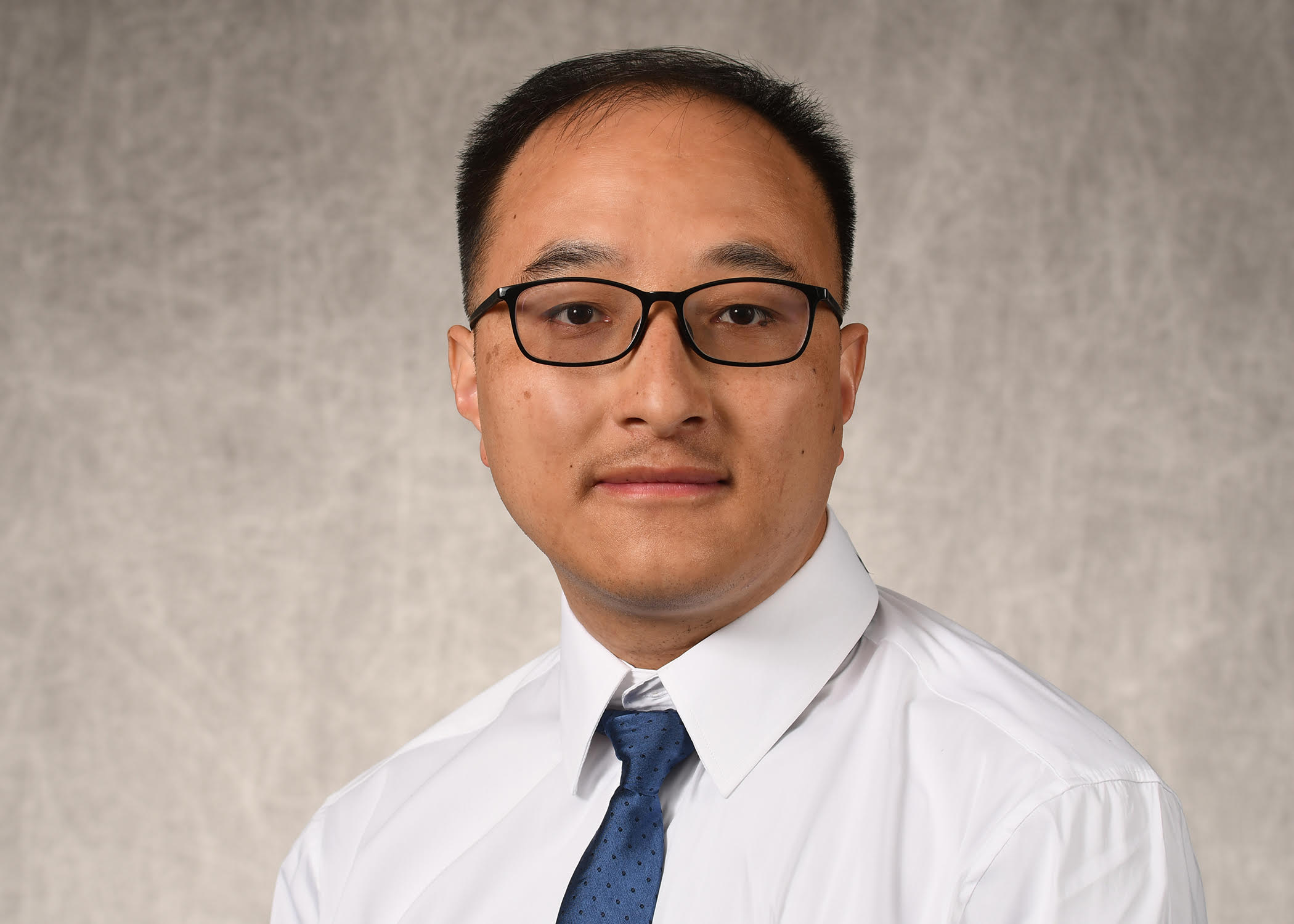
Rider’s Department of Computer Science and Mathematics has been awarded its first National Science Foundation grant of $650,000, with assistant professor Jay Luo serving as the leading principal investigator.
Of the total fund, $217,779 of it will be invested at Rider to support experiential learning in artificial intelligence security and privacy for undergraduate students. The remaining total will be split three ways to three R1 collaborative institutions — Indiana University Bloomington, the University of Missouri–Kansas City and the University of Hawaiʻi at Mānoa — that Rider gets the opportunity to cooperate with.
Although Rider is not an R1 institution, to work alongside top-tier universities in research activity is a step forward in itself to expanding the research opportunities for Rider students in all fields.
The NSF funding is intended as a three-year program that will run from Fall 2026 to Spring 2029. Annually, the department will submit a report on the progress made based on the grant.
While Rider has received similar funding in the past, an NSF grant has never been awarded toward AI technology and security prior to this, which Luo suggested to be the highest sponsorship.
“Every year, [NSF receives] thousands of proposals from all kinds of universities within the United States, and then they have a panel to review the proposals, and they will then fund some of them. Usually, for education, the fund rate is around 25%, but in the past year, I think it is even lower, around 20%,” Luo said.
The funding Rider received is going straight to expanding the experiential learning process for undergraduate students in AI security and privacy. Luo explained that, with the grant, the university will be able to sponsor students researching AI security-related projects and set up team competitions for those doing well in their work in order to encourage students’ studies.
Luo additionally shared insight into how the grant will be able to connect the academic and real worlds, especially for cybersecurity and computer science students, as it offers more opportunities. The program made possible by the grant is designed to connect classroom learning with research experience and workplace-ready skills.
“We’ll also be able to use this money to collaborate with the industry. We’re going to partner with the industrial partners so that we can build up this pipeline and students can have a smooth transition from the classroom to the workplace,” Luo said.
The grant has already allowed the department to hire two undergraduate students as research mentors. In the whole three years, the university will be able to hire three undergraduate students to work on research projects and mentorships each semester.
Phan An Nguyen, a senior computer science and cybersecurity double major, is one of the undergraduate students hired as a research mentor this semester. Nguyen has been focusing on his studies in CYB 490, the independent research class for cybersecurity majors, and will continue with the new support provided by the NSF.
When Nguyen was first informed of the department’s award and his offered position as a research mentor, he relayed feeling a mixture of emotions.
“When this came to me as an opportunity, I didn’t really believe it,” he said. “[Luo] came and told me that we got funding from NSF to do research and for me to continue my CYB 490 research, and I really respected that, because it felt like he really believed in me.”
The research mentors will aid their fellow students by providing advice and direction in their projects and class work, while also continuing their own focused research.
Nguyen is stepping into the position with ambition, hoping to help his peers, while also finding the next path for his academic career.
“For me, it’s going to help me get lots of experience doing research so that I can apply for graduate school and so that I can know if I’m fit for that research or not. For me to help other students, that would be great,” Nguyen said.
Ultimately, with the resources provided by the NSF grant, Luo and the rest of the computer science and mathematics department want to create new opportunities for any Rider students interested in AI security and technology.
“This is not only for the computer science and cybersecurity department. We will build our program for a competition where all of the students on campus, if they have an interest in exploring AI security topics, can form a team and join the competition,” Luo said.
While discussing the future of Rider with this newfound funding, Nguyen shared a desire for the department to continue to procure financial support for all the new ideas students have that they can now bring into fruition.
“I really want this funding to continue because I know a lot of my friends want to do research as well. They’ve got some new ideas and they should get an opportunity as well,” Nguyen said.
AI is known to be controversial in its use and potential abuse as a resource in academic settings. Luo, however, wanted to endorse a different perspective of AI, as he stated a goal to not get away with using AI, but rather, an intention to beat AI with the provided grant.
Luo said, “Of course, AI itself has a lot of concerning issues about security and privacy but with this grant, we fund students to explore the AI security frameworks, the practice and the technological advancements. We focus on it from a technology perspective, not from an ethical perspective.”