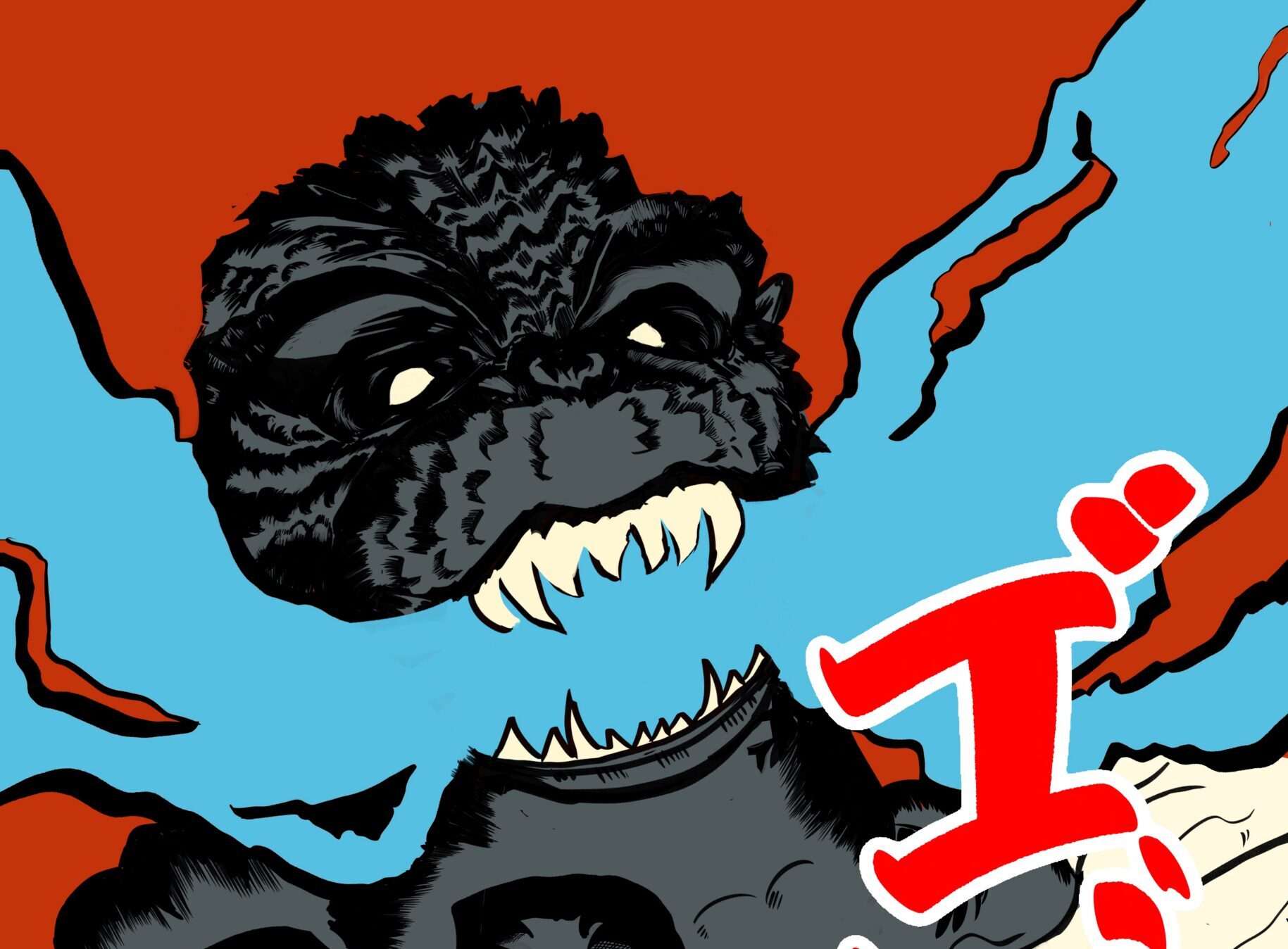
“Godzilla Minus Zero:” a monstrously good film
By Ryan Denkovic
Too often, it is the case that the sequel to a great movie ends up being subpar. Every so often, however, a filmmaker will prove that they can make a movie that both respects the first film’s resolution and naturally expands on the world. “Godzilla Minus Zero” accomplishes this with flying colors.
“Godzilla Minus Zero” is a sequel to the 2023 film “Godzilla Minus One,” written and directed by Takashi Yamazaki. Yamazaki returned to direct this new film, and he knocked it out of the park once again. “Godzilla Minus One” follows the basic structure of most Godzilla films: Godzilla comes out of the Pacific Ocean and begins attacking Japan. The human characters then need to fight back against Godzilla and prevent any more destruction and casualties. “Godzilla Minus Zero” added a new megafauna to the mix. In 1949, two years after the events of the first film, a dragon dubbed “Ghidorah” attacks the city of Matsumoto and causes mass destruction. A team of scientists and former military officials set out to bomb Ghidorah and euthanize the creature, but their attempt fails. They then try to lure Ghidorah and the previously dormant Godzilla to Ginza, Tokyo — still a wasteland after the events of the first film — so the two Kaiju can fight to the death.
Along with its extremely high Rotten Tomatoes score of 99%, “Godzilla Minus One” is one of my favorite films of all time, so I had extremely high expectations for this sequel film and the marketing only raised those expectations. So the question is: “Did it live up to these expectations?” My answer is yes, they did for the most part.
I have a single gripe with this film: I had a hard time resonating with the main characters’ emotional plotline. The main characters, Koichi and Noriko, have an incredibly gripping and emotional story in the first film that brings me to tears every time I watch the film. In the new film, their plotline focuses mainly on their love for their daughter, Akiko; and being that I am not a parent, I had a hard time investing myself entirely in the emotional crux of the film as opposed to the first film, where their emotional drive is mainly for their love for each other. Not to say I did not feel emotional during the emotional scenes, but I had a hard time resonating with them juxtaposed to that of the first film. Other than that one element, I have absolutely zero problems with this film, but three things specifically take the cake for me.
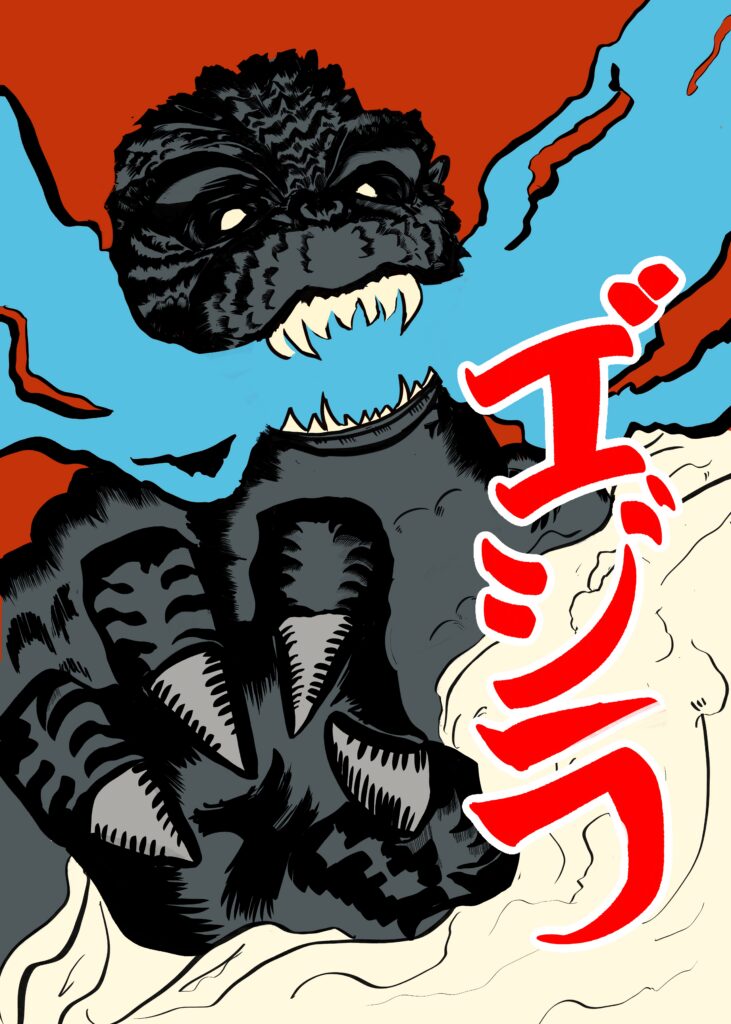
Graphic by Grace Juarez
First, the score is incredible. Naoki Sato’s orchestration of the first film is incredible and he flexes his composing muscles once again. The first time the Godzilla theme played, it was almost euphoric. The same thing applies to the theme composed for Ghidorah, too; it is a high trill that invokes a primal sense of fear whenever you hear it. It is also an homage to the sound of Ghidorah’s flying in the Showa-era Godzilla films from the 60s and 70s, which was an incredibly cool Easter egg for those in the know.
Secondly, the acting prowess carries over from the first film. All members of the main cast, once again, show an incredible understanding and talent in the art, but there are some new standout performances, as well. Masami Nagasawa gives an incredible performance as the guilt-stricken Aoyama, but the best performance in this film by far is Min Tanaka as Kanji Murakami. Murakami is an incredibly tragic character, and Tanaka’s performance is simply outstanding; something akin to Willem Dafoe’s Norman Osborne in the Sam Raimi “Spider-Man” trilogy. Truly a menacing character through and through.
Finally, the effects are absolutely astounding. “Godzilla Minus One” won Best Visual Effects at the 96th Academy Awards on an incredibly small budget, with a relatively larger budget, “Godzilla Minus Zero” was expected to deliver incredible VFX, and it certainly did. Godzilla and King Ghidorah look incredibly lifelike, and other, less technically challenging VFX like explosions and the destruction of buildings look really good, as well. What took me a little by surprise, though, was how good the practical effects were, too. I was not expecting anything bad, per se, but a lot of the “gorier” effects took me by surprise. In some scenes, they were actually quite sickening, but that is exactly the type of thing that I would want from those specific scenes and effects.
“Godzilla Minus Zero” offers a glimpse back into the world that “Godzilla Minus One” meticulously painted, and executes its vision flawlessly. However, while the effects, score and acting are all incredible, I had a tough time investing myself in the emotional side of this film. As I said before, I still got emotional during the right moments, but I had trouble fully resonating with it as much as I would have liked to; and as much as I would love to give this film a five-star rating, just like its predecessor, I feel as though the highest I can give it is a 4.5. I would recommend both “Godzilla Minus One” and “Godzilla Minus Zero” to everyone. And even though almost all of the dialogue is entirely spoken in Japanese, I would recommend these films to anyone and everyone in a heartbeat. As Bong Joon-ho said: “Once you overcome the one-inch tall barrier of subtitles, you will be introduced to so many more amazing films.”
Ryan Denkovic is a sophomore English major