The 2026 midterms marked hope for the queer community
By Cal Sutton
Despite the rounds of vile and disgusting things said about transgender and queer individuals every day, this year’s midterm elections gave many people, including myself, hope for the future.
Not only have I been given hope in terms of representation — and hopefully the lack of anti-trans legislation to follow — but also have hope that people like me can have a true voice.
Transgender and queer voices are often diminished and made quiet by the cisgender man we so often view in politics. It is somewhat of a breath of fresh air to see someone who is “like me” in these seats, with loud voices on important decisions.
Across the country, we now have at least 17 LGBTQIA+ lawmakers who were voted into Congress on Nov. 3.
Though, I must also take the time to mention the other lawmakers who have served the United States and were part of the LGBTQIA+ community, but did not get the chance to come out. Statistically, it is highly probable that there have been congresspeople who have been queer-identifying but never had the opportunity to openly express themselves. So for that, I bid my love toward them.
Sarah McBride was the first openly transgender member of the United States Congress, who assumed office in January 2025 and won reelection this year. Her story is one that makes me think very deeply about how transgender individuals are represented and discussed in U.S. legislature.
When I think of the videos I have seen from inside congressional hearings, votes and discussions, I see McBride being repeatedly disrespected. Even so, she remains strong, upholds her dignity and fights for the rights and respect of everyone around her.
I hope that the amount of beautiful, brave faces that will be entering Congress will finally prove how strong of a voice queer individuals have. I hope this will prove we are worth hearing, that we have good ideas worth acting on and that there is space for us.

Graphic by Grace Juarez
The 2026 midterm election results did not come so much as a surprise, but instead, a welcomed change. It is fair to say that, with President Donald Trump’s current approval rating, and the fact that midterms are usually in favor of the non-presidential party, the blue wave was expected.
What I really did not expect was the aggressiveness that surfaced in light of this blue wave. Some people, including myself, have regarded it as a “blue tsunami,” given its impact on the states even perceived as the most red of them all.
Texas has not had a Democratic governor in over thirty years, and it being a Latina woman to take that position is astonishing. Gina Hinojosa’s governorship will hopefully have a solid impact on the future of Texas’ lawmaking decisions.
Seeing a diverse set of individuals from groups that have been underrepresented in Congress and in higher seats within the government gives me so much hope for the upcoming years, and beyond
From the trans and nonbinary communities, there are multiple congresspeople to represent our voices. For House and Senate seats in Georgia, Michigan, Alabama, Washington, Wisconsin and other hyperlocal, non-congress seats, transgender and nonbinary individuals have won positions to the encouragement of many LGBTQIA+-identifying individuals.
The outcome of the 2026 midterm elections were a beacon of hope for the LGBTQIA+ community and its allies, and I am filled with pride for my community and excitement for the future.
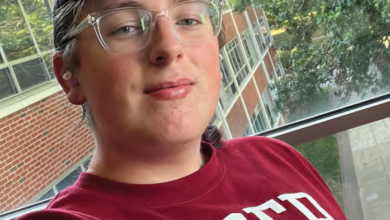
Cal Sutton is a junior journalism major
This article is part of the Out on Campus column by Cal Sutton to spread awareness and shine light on LGBTQIA+ identities.